
What organisers ask us most about replays and on-screen graphics
Hannah Whitlock answers the question we hear most from organisers: what do replays and graphics really involve, who operates them, and what do we need from you before the show?
The question behind most enquiries
When an organiser first rings about a concert or festival broadcast, the question we hear most is a plain one: do we really need someone dedicated to replays and graphics, or can the vision mixer cover it? It is a fair thing to ask, because every extra seat in the gallery has a cost, and people want to know what they are paying for before they agree to it.
My short answer is that it depends on the show, and I would rather explain how we decide than hand you a rule of thumb. Replay and graphics operation is the work of putting recorded moments and on-screen text into the live programme at the right second, in step with what is happening on stage. This note sets out what that involves, what it does not, and what we ask of you so it goes smoothly.
What replay operation actually involves
A replay operator records the camera feeds as the show runs and keeps track of moments worth showing again: a guitar solo, a crowd reaction, a goal in a charity match, a key moment in a stage performance. When the director calls for a replay, the operator cues the clip, checks it is the right angle, and plays it back into the programme at the speed requested.
The skill is mostly in anticipation. A good operator is already marking the next clip while the last one is on air, and knows when the director will have a gap to use it. For music shows, replays are used sparingly and usually between songs, because cutting away from a live performance to a repeat can interrupt the mood. For sport or competition events they are central. We agree the expected use with you before the day.
- Clips are marked live from the recorded camera feeds
- The director decides when a replay goes to air
- Playback speed and angle are confirmed before cueing
Graphics: lower thirds, titles and score boxes
On-screen graphics cover the text and images laid over the picture: names and job titles of performers or speakers, song titles, sponsor panels, social media handles and any information you want viewers to see. The operator loads these into a graphics system ahead of time and triggers each one on the director's call, so it appears when the person is on screen and not a moment later.
Most of the work happens before doors open. Spelling, order and timing all need checking against your running order, because a misspelt name on a live broadcast cannot be quietly corrected. We build a rundown of every graphic, keyed to the schedule, so that if the running order shifts during the day, the operator can reorder items without searching for them.
What we need from you before the day
The most useful thing you can send is a running order with the correct spelling of every name, title and sponsor line you want on screen. Send logos as image files with a clear background where possible, and tell us any colours or fonts your brand uses so the graphics sit comfortably alongside your other material.
We also ask who has the final say on wording. On the day there is rarely time for a committee, so naming one contact who can approve a late change keeps the gallery calm. Hannah's team will confirm all of this in writing before the production, so there is a single agreed list that everyone in the control room is working from.
- Running order with exact name and title spellings
- Logo files and brand colours
- One named person for last-minute approvals
When one person can cover both roles
On a small production with a handful of cameras, a short running order and few graphics, a single operator can sometimes handle both replays and graphics. That works when the two rarely compete for attention at the same moment, and when the show has natural pauses.
It stops working when the show is fast, when replays are expected throughout, or when graphics are frequent and tightly timed to the action. Then asking one person to do both risks mistakes in each. We will tell you plainly which case we think yours is, and explain why. If we believe one operator is enough, we say so, because it keeps your costs down and the gallery uncluttered.
What to expect on the day
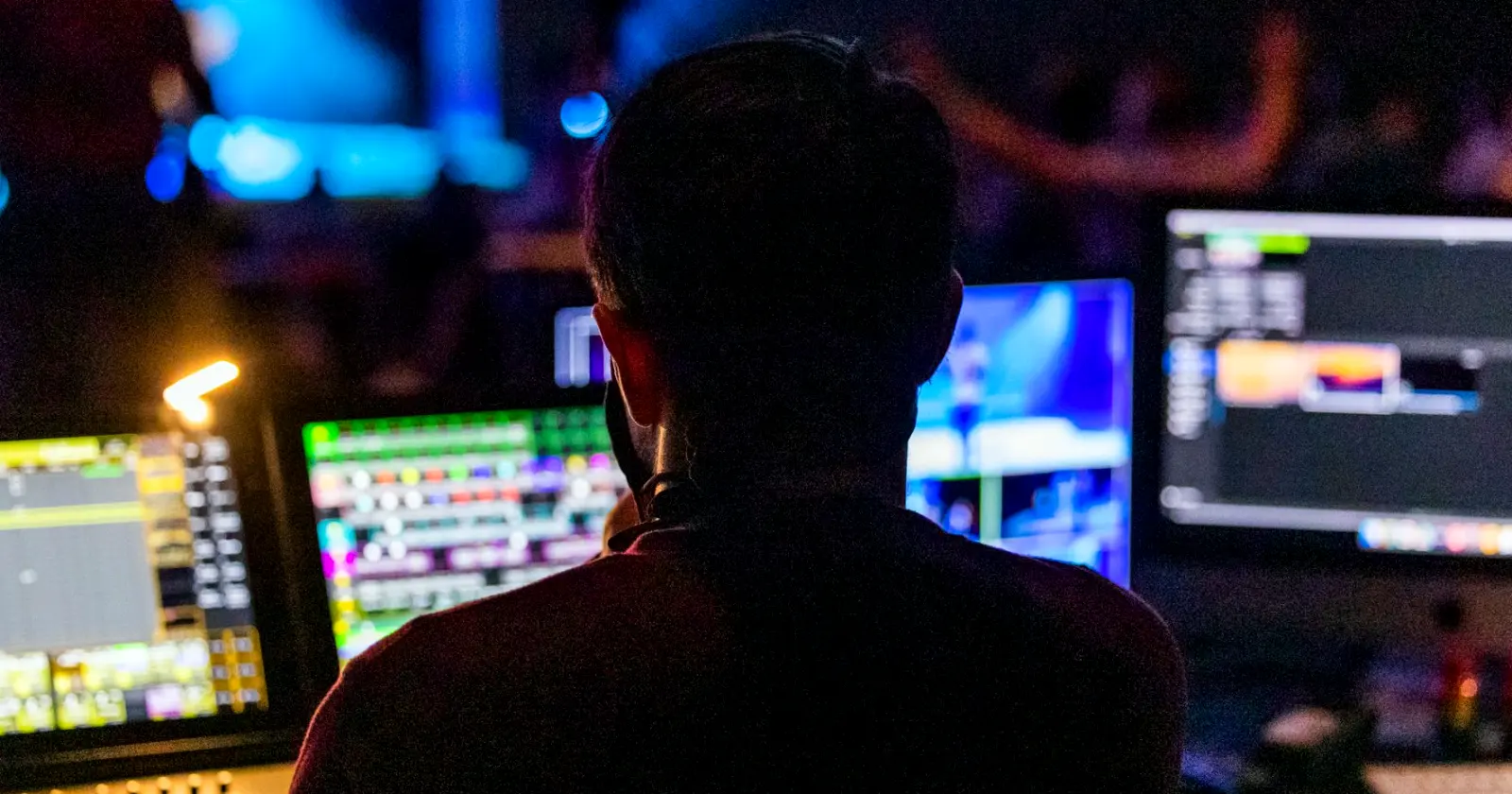
On the day, the replay and graphics operator is in the gallery from setup, testing every graphic against the signal and checking each camera feed is recording properly. Once the show starts, they work to the director's calls, usually delivered over talkback, and stay in step with the technical director and vision mixer.
If something changes, such as a speaker running over or a song dropped from the set, the operator adjusts the graphics rundown and tells the director what has moved. You will not see most of this work, which is the point: the viewer sees a clean programme, with the right name under the right face, and a replay that arrives when it adds something.
So, do you need a dedicated replay and graphics operator? For fast, camera-heavy shows, usually yes. For smaller, slower productions, often one person is enough. Either way, the work depends on preparation: accurate names, clear files and one person who can decide quickly. Send us your running order and tell us what you want viewers to see, and we will say honestly how many people the gallery needs.
Hannah Whitlock
Production ManagerHannah schedules crews, equipment and client sign-off from first enquiry to final invoice.